
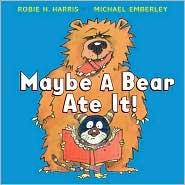
 This book is wonderful for how, why, when and where questions! There are several pictures in this book with no words. When you come to these pictures, ask the children what the character is doing, what is missing and how the character is feeling.Read the book Maybe a Bear Ate It by Robie Harris
Early Literacy Aside--Example: Asking questions using what and how, as I did when I read the story will help strengthen your children's narrative skills, which in turn helps to build comprehension ability as the child begins to read.
This book is wonderful for how, why, when and where questions! There are several pictures in this book with no words. When you come to these pictures, ask the children what the character is doing, what is missing and how the character is feeling.Read the book Maybe a Bear Ate It by Robie Harris
Early Literacy Aside--Example: Asking questions using what and how, as I did when I read the story will help strengthen your children's narrative skills, which in turn helps to build comprehension ability as the child begins to read.
Submitted by Dawn Cheney, Glenvar Branch, Roanoke County (VA) Public Library
 Read the book Snap! by Marcia Vaughan.Early Literacy Aside--Example: This book lends itself to retelling events which helps your child understand the story. Encourage your child with questons that leave room for them to describe what they hear or see. I used questions like, "What did Joey do when his Mom fell asleep?" and "Who did he meet?"
Early Literacy Aside--Empower: The ability to retell a story is an important skill for children to have in order to understand what they are reading. Predicting what happens next and acting it out, or as it's usually called, pretend playing, is a fun way to retell a story and to gain background knowldge along the way.
Read the book Snap! by Marcia Vaughan.Early Literacy Aside--Example: This book lends itself to retelling events which helps your child understand the story. Encourage your child with questons that leave room for them to describe what they hear or see. I used questions like, "What did Joey do when his Mom fell asleep?" and "Who did he meet?"
Early Literacy Aside--Empower: The ability to retell a story is an important skill for children to have in order to understand what they are reading. Predicting what happens next and acting it out, or as it's usually called, pretend playing, is a fun way to retell a story and to gain background knowldge along the way. Early Literacy Aside--Explain: Narrative skills is helping your child tell a story. Researchers say this is an important skill towards your child learning to read, understanding what he will read. In this storytime we will have fun while using narrative skills.During the storytime:
Early Literacy Aside--Example: In this story we will be using narrative skills to tell our story and to talk about the events taking place. Narrative skills is one of the early literacy skills that help your children learn to read. This includes giving your children time to think about and answer questions about the story. Listen as I ask questions that cannot be answered with just yes or no.
Read the book.
Early Literacy Aside--Empower: Ask your child about storytime today when you get home and help them retell one of the stories. You'll be continuing to develop your child's narrative skills!
Early Literacy Aside--Explain: Narrative skills is helping your child tell a story. Researchers say this is an important skill towards your child learning to read, understanding what he will read. In this storytime we will have fun while using narrative skills.During the storytime:
Early Literacy Aside--Example: In this story we will be using narrative skills to tell our story and to talk about the events taking place. Narrative skills is one of the early literacy skills that help your children learn to read. This includes giving your children time to think about and answer questions about the story. Listen as I ask questions that cannot be answered with just yes or no.
Read the book.
Early Literacy Aside--Empower: Ask your child about storytime today when you get home and help them retell one of the stories. You'll be continuing to develop your child's narrative skills! Early Literacy Aside--Explain: Researchers have found that 95% of children's attention goes to the pictures in the book. When you run your fingers under the title as you read it, this helps show them you are reading the text, not the pictures. This is part of print awareness and is one of the skills children need to learn to read.During the storytime--Read the book running your finger under the repeated phrases.
Early Literacy Aside--Example: You can run your finger under the repeated phrases to match the text to the words. Then your action doesn't get in the way of the story. Read the book running your finger under the repeated phrases.
Early Literacy Aside--Empower: When you read withyour children at home, hold the book upside down or backwards and see if your child notices. Be sure to turn the book if a page is in a different direction. Theis helps develop their print awareness.
Submitted by Melissa Davis, Bedford (VA) Public Library
Early Literacy Aside--Explain: Researchers have found that 95% of children's attention goes to the pictures in the book. When you run your fingers under the title as you read it, this helps show them you are reading the text, not the pictures. This is part of print awareness and is one of the skills children need to learn to read.During the storytime--Read the book running your finger under the repeated phrases.
Early Literacy Aside--Example: You can run your finger under the repeated phrases to match the text to the words. Then your action doesn't get in the way of the story. Read the book running your finger under the repeated phrases.
Early Literacy Aside--Empower: When you read withyour children at home, hold the book upside down or backwards and see if your child notices. Be sure to turn the book if a page is in a different direction. Theis helps develop their print awareness.
Submitted by Melissa Davis, Bedford (VA) Public Library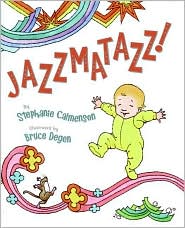 Early Literacy Aside--Example: What a fun and noisy book this is! Listen to the different kinds of sounds that music can make like plink, plink and bang-a-bang along with the jazz rhythm of Doo-dat, diddy-dat, diddy-dat, doo! As children learn to hear and make not only animal sounds but sounds of many different things, they are developing phonological awareness which will later help them sound out words as they learn to read.
 Early Litearcy Aside--Explain: Today our early literacy tip is on letter knowledge. You may think of letter knowledge as being able to write letters. Actually there is a lot to know related to letter knowledge long before children can write the letters. One aspect is recognizing shapes. Today I'll be pointing out some fun ways we can help them recognize and talk about shapes.
 During several consecutive storytimes you would choose a song to sing every time. For example, I chose Row Your Boat.In each storytime we sing the song correctly:
Row, row, row your boat; gently down the stream
Merrily, merrily, merrily, merrily; life is but a dream.
Then we sing the song again in a silly way, changing the first sound of each word:
Bow, bow, bow, bour boat, bently, bown be bream
Berrily, berrily, berrily, berrily; bife bis but ba bream.
Then we sing it again correctly.
Early Literacy Aside--Example: Singing nonsense songs like this help children hear the smaller sounds in words, in a fun way! Try it with different songs. Being able to change the first sound in a word is part of phonological awareness.
During several consecutive storytimes you would choose a song to sing every time. For example, I chose Row Your Boat.In each storytime we sing the song correctly:
Row, row, row your boat; gently down the stream
Merrily, merrily, merrily, merrily; life is but a dream.
Then we sing the song again in a silly way, changing the first sound of each word:
Bow, bow, bow, bour boat, bently, bown be bream
Berrily, berrily, berrily, berrily; bife bis but ba bream.
Then we sing it again correctly.
Early Literacy Aside--Example: Singing nonsense songs like this help children hear the smaller sounds in words, in a fun way! Try it with different songs. Being able to change the first sound in a word is part of phonological awareness.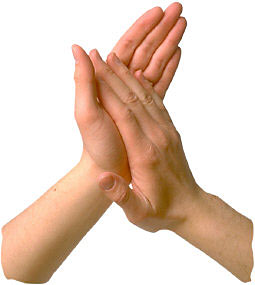 Super Duper 1, 2, 3
Can you say this word (or name) with me?
[volcano--or word/name of your choice]
Say it (You say it)
[Children/adults repeat the word with you]
Clap it (You clap it) (Say it again and clap it)
[Children/adults clap the word with you, one clap per syllable]
Snap it [snap fingers] (Say it again and snap it)
[Children/adults snap fingers together with you, one snap per syllable]
Tap it [tap with foot or tap knees] (Say it again and tap)
[Children/adults tap feet (or knees) with you, one tap per syllable]
Early Literacy Aside–Example: You can do this little song with any word! Dividing words into sound parts, into syllables, helps children hear the smaller sounds in words, one part of phonological awareness, the ability to hear the smaller sounds in words.
Super Duper 1, 2, 3
Can you say this word (or name) with me?
[volcano--or word/name of your choice]
Say it (You say it)
[Children/adults repeat the word with you]
Clap it (You clap it) (Say it again and clap it)
[Children/adults clap the word with you, one clap per syllable]
Snap it [snap fingers] (Say it again and snap it)
[Children/adults snap fingers together with you, one snap per syllable]
Tap it [tap with foot or tap knees] (Say it again and tap)
[Children/adults tap feet (or knees) with you, one tap per syllable]
Early Literacy Aside–Example: You can do this little song with any word! Dividing words into sound parts, into syllables, helps children hear the smaller sounds in words, one part of phonological awareness, the ability to hear the smaller sounds in words.

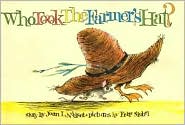 Read the book Who Took the Farmer's Hat? by Joan Nodset.
Quisque iaculis facilisis lacinia. Mauris euismod pellentesque tellus sit amet mollis.