
 Early Literacy Aside--Explain: Rhyming is one way that children learn to hear that words are made up of smaller parts. By doing rhymes with them you are supporting phonological awareness. This skill helps them when they later try to sound out words. And it's fun, too!Read Who's There on Halloween? by Pamela Beall
Song: Do a rhyming song to the tune of Are You Sleeping? We are rhyming; we are rhyming. Rhyme with me; rhyme with me. Nose rhymes with toes; nose rhymes with toes. (substitute other words from story) Rhyme with me; rhyme with me. Early Literacy Aside--Empower: Take advantage of lots of opportunities to play rhyming games with your children. Simple activities like this will help your child be able to sound out words when they learn to read.
Submitted by participants in Saskatchewan Library Association Conference
 Early Literacy Aside--Explain: Today we are focusing on phonological awareness, the early literacy skill that includes rhyming and helps children hear parts of words. This activity will help children later sound out words as they learn to read.Early Literacy Aside--Example: This story, Fidgety Fish by Ruth Galloway, has rhyming and non-rhyming segments. We'll see words that rhyme and words that don't. Rhyming breaks words into smaller parts. Words that sound like the sounds they make also support phonological awareness. This is called onomatopoeia.
 Early Literacy Aside--Explain: Narrative skills includes the ability to retell stories. This is one of the early literacy skills that researchers have noted are important so that your children will later understand what they read.Read Dog Blue by Polly Dunbar.
Early Literacy Aside--Example: Acting out stories or part so them helps children internalize the story and remember it. It will make it easier for your children to retell the story and understand it. They also learn the structure of story--how stories work with a beginning, a middle, and an end.
Act out the story.
Early Literacy Aside--Empower: Children enjoy talking about books you have read together. It is a good way to engage them in conversation, and also helps them remember the story they have read. The ability to retell a story is an important skill to learn before going to school. It helps them understand how stories work and to understand what they will read.
Early Literacy Aside--Explain: Narrative skills includes the ability to retell stories. This is one of the early literacy skills that researchers have noted are important so that your children will later understand what they read.Read Dog Blue by Polly Dunbar.
Early Literacy Aside--Example: Acting out stories or part so them helps children internalize the story and remember it. It will make it easier for your children to retell the story and understand it. They also learn the structure of story--how stories work with a beginning, a middle, and an end.
Act out the story.
Early Literacy Aside--Empower: Children enjoy talking about books you have read together. It is a good way to engage them in conversation, and also helps them remember the story they have read. The ability to retell a story is an important skill to learn before going to school. It helps them understand how stories work and to understand what they will read. Early Literacy Aside--Explain: Researchers have found that one of the early literacy skills is phonological awareness. This is the ability to hear and play with the smaller sounds in words, like rhyming and hearing the beginning sounds of words. Today I'll be pointing out ways you can help your children with this skill.Early Literacy Aside--Example: Our next book is one we can sing. Listen to all the rhymes in this book. Singing slows down language and rhyming breaks down words into parts. Both of these help your children hear the smaller sounds in words. You can also think of other words that rhyme, or add extra verses at the end.
Read the book Animal Boogie by Debbie Harter.
Early Literacy Aside--Explain: Researchers have found that one of the early literacy skills is phonological awareness. This is the ability to hear and play with the smaller sounds in words, like rhyming and hearing the beginning sounds of words. Today I'll be pointing out ways you can help your children with this skill.Early Literacy Aside--Example: Our next book is one we can sing. Listen to all the rhymes in this book. Singing slows down language and rhyming breaks down words into parts. Both of these help your children hear the smaller sounds in words. You can also think of other words that rhyme, or add extra verses at the end.
Read the book Animal Boogie by Debbie Harter.
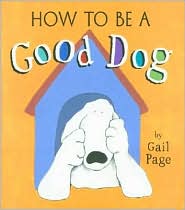 Early Literacy Aside--Explain: Narrative skills is the ability to describe things and to talk about events, and to tell stories. Researchers have noted this skill as one of the early literacy skills that will help your child be ready to read. It helps them understand what they will read.Our next book is How To Be a Good Dog by Gail Page. Let's see what this dog learns.
Read How to Be A Good Dog.
Early Literacy Aside--Example: Acting out stories with your whole body helps our children remember the story to retell it. Let's act out the story together now.
Early Literacy Aside--Empower: Developing narrative skills is as easy as talking with your child about what you've read AND especially having them respond too. You can ask them, "What was the funniest part for you?"
Early Literacy Aside--Explain: Narrative skills is the ability to describe things and to talk about events, and to tell stories. Researchers have noted this skill as one of the early literacy skills that will help your child be ready to read. It helps them understand what they will read.Our next book is How To Be a Good Dog by Gail Page. Let's see what this dog learns.
Read How to Be A Good Dog.
Early Literacy Aside--Example: Acting out stories with your whole body helps our children remember the story to retell it. Let's act out the story together now.
Early Literacy Aside--Empower: Developing narrative skills is as easy as talking with your child about what you've read AND especially having them respond too. You can ask them, "What was the funniest part for you?"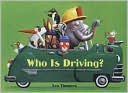 Early Literacy Aside--Explain: Today I'll be pointing out some activities we are doing that support ealry literacy in the area of vocabulary. This is the term that researchers give to knowing the meanings of words. You can see what we do here in storytime and you may get some ideas of what you can do with your children throughout the day.Read the book Who Is Driving? by Leo Timmers. Pause occasionally to talk about a picture and ask what they see in the picture. Add a word or two, synonyms to the words in the the book, the children might not know.
Early Literacy Aside--Example: As you can see, I don't just read the book. We talk about the pictures and ask questions. Allow time for your child to say something back, even if you don't understant exactly what they say. You can see I added in a couple of unfamiliar words too.
Early Literacy Aside--Empower: Our youngest children learn words that name things they can see (pig, tractor, hippopotamus). As children get older they understand words for feelings and concepts, and older still, they understand words for ideas. It is good to expose even young children to all kinds of words, but they will understand the words for things they can see first.
Early Literacy Aside--Explain: Today I'll be pointing out some activities we are doing that support ealry literacy in the area of vocabulary. This is the term that researchers give to knowing the meanings of words. You can see what we do here in storytime and you may get some ideas of what you can do with your children throughout the day.Read the book Who Is Driving? by Leo Timmers. Pause occasionally to talk about a picture and ask what they see in the picture. Add a word or two, synonyms to the words in the the book, the children might not know.
Early Literacy Aside--Example: As you can see, I don't just read the book. We talk about the pictures and ask questions. Allow time for your child to say something back, even if you don't understant exactly what they say. You can see I added in a couple of unfamiliar words too.
Early Literacy Aside--Empower: Our youngest children learn words that name things they can see (pig, tractor, hippopotamus). As children get older they understand words for feelings and concepts, and older still, they understand words for ideas. It is good to expose even young children to all kinds of words, but they will understand the words for things they can see first. Aside: As your baby begins to talk, respond by elaborating on what he says. For example, if your baby points to a picture and says "cat" respond by saying, "Yes, that's a little cat with orange fur." Talking about the picture even if your baby doesn't understand everything also helps build your child's vocabulary. For example, you could say, "Look, the two kittens are playing with the string. They are having fun together."Submitted by Cindy Christin, Bozeman (MT) Public Library
 Early Literacy Aside--Explain: Talking with your children while reading, encouraging them to make comments and ask questions is one way to share a book that develops your child's understanding of the book. Make reading with your child a postive experience by allowing your child to make comments and ask questions. Try to focus all your attention on your child for that time.During the storytime, demonstrate these techniques with one or more of your books. Point out what you are doing.
Early Literacy Aside--Empower: Talking with your children and giving them time to respond is supervaluable, even in a conversation consisting entirely of baby babble. This helps your children develop conversation skills. Remember that it can take young children from 5 to 12 seconds to process a question and formulate a response, so it's really important to gie them that extra time to express themselves.
Early Literacy Aside--Explain: Talking with your children while reading, encouraging them to make comments and ask questions is one way to share a book that develops your child's understanding of the book. Make reading with your child a postive experience by allowing your child to make comments and ask questions. Try to focus all your attention on your child for that time.During the storytime, demonstrate these techniques with one or more of your books. Point out what you are doing.
Early Literacy Aside--Empower: Talking with your children and giving them time to respond is supervaluable, even in a conversation consisting entirely of baby babble. This helps your children develop conversation skills. Remember that it can take young children from 5 to 12 seconds to process a question and formulate a response, so it's really important to gie them that extra time to express themselves. Demonstrate aspects of dialogic reading* by asking open-ended questions during your sharing of a book.Book Introduction: With this next book we are going to focus on what we call "dialogic" or "interactive reading."
Read a book. Come back to a picture and ask a question that cannot be answered with yes or now.
Early Literacy Aside--Example: This technique of sharing a book helps develop their narrative skills, their ability to describe things and experiences.
Early Litearcy Aside--Empower: Try dialogic or interactive reading at home with your child. Simply ask questions about what you've read. You can say, Guess what will happen next or relate the story to your child's real experience. Try to ask questions that cannot be answered with yes or no, or just by pointing to the pictures. Having the children talk about the book helps the develop narrative skills. Also, when the child gives a one-word response, you might expand on what she said, adding description or more information.
Demonstrate aspects of dialogic reading* by asking open-ended questions during your sharing of a book.Book Introduction: With this next book we are going to focus on what we call "dialogic" or "interactive reading."
Read a book. Come back to a picture and ask a question that cannot be answered with yes or now.
Early Literacy Aside--Example: This technique of sharing a book helps develop their narrative skills, their ability to describe things and experiences.
Early Litearcy Aside--Empower: Try dialogic or interactive reading at home with your child. Simply ask questions about what you've read. You can say, Guess what will happen next or relate the story to your child's real experience. Try to ask questions that cannot be answered with yes or no, or just by pointing to the pictures. Having the children talk about the book helps the develop narrative skills. Also, when the child gives a one-word response, you might expand on what she said, adding description or more information. Early Literacy Aside--Explain: I will be having the children hear and make animal sounds. This is one of the ways to develop phonological awareness, hearing the smaller sounds in words. This is the beginning step to later sounding out words when they learn to read.Book Introduction: Our next book is What Shall We Do with teh Boo-Hoo Baby? by Cressida Cowell. All join in together with the animal sounds and the crying baby! [If you want you can practice the animal sounds and the boo-hoo for crying before starting the book.]
Read the book.
Early Literacy Aside--Example: Good job everyone. Parents, letting the children hear and make the sounds helps them later hear the sounds in words.
Early Literacy Aside--Empower: Feel free to check out these books I have displayed which have animal and other sounds, which will help with phonological awareness.
Early Literacy Aside--Explain: I will be having the children hear and make animal sounds. This is one of the ways to develop phonological awareness, hearing the smaller sounds in words. This is the beginning step to later sounding out words when they learn to read.Book Introduction: Our next book is What Shall We Do with teh Boo-Hoo Baby? by Cressida Cowell. All join in together with the animal sounds and the crying baby! [If you want you can practice the animal sounds and the boo-hoo for crying before starting the book.]
Read the book.
Early Literacy Aside--Example: Good job everyone. Parents, letting the children hear and make the sounds helps them later hear the sounds in words.
Early Literacy Aside--Empower: Feel free to check out these books I have displayed which have animal and other sounds, which will help with phonological awareness. Gonna make my noise all day.
Clang, clang, rattle-bing-bang
Gonna make my noise all day.
You pass out musical instruments and have them play to the rhythm of the song.
Early Literaacy Aside--Example: As the children are saying the words of the sounds, they are developing phonological awareness.
Having them play to the rhythm of the words also helps develop this skill which will later help them sound out words when they learn to read.
Gonna make my noise all day.
Clang, clang, rattle-bing-bang
Gonna make my noise all day.
You pass out musical instruments and have them play to the rhythm of the song.
Early Literaacy Aside--Example: As the children are saying the words of the sounds, they are developing phonological awareness.
Having them play to the rhythm of the words also helps develop this skill which will later help them sound out words when they learn to read.
 Early Literacy Aside--Explain: There are many ways we can help children enjoy books as we share books together. Children who have positive experiences around books and reading are more likely to stick with learning to read even when it is difficult. I'll be pointing out some ways to share books to make it enjoyable.
As you read the book have children repeat the phrase, "I do. I'm a . . . " with each animal.
Early Literacy Aside--Example: Having the children participate by guessing the animals and responding when the animal appears helps them enjoy the book. This helps support their print motivation.
Early Literacy Aside--Explain: There are many ways we can help children enjoy books as we share books together. Children who have positive experiences around books and reading are more likely to stick with learning to read even when it is difficult. I'll be pointing out some ways to share books to make it enjoyable.
As you read the book have children repeat the phrase, "I do. I'm a . . . " with each animal.
Early Literacy Aside--Example: Having the children participate by guessing the animals and responding when the animal appears helps them enjoy the book. This helps support their print motivation.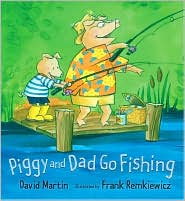 Read the book Piggy and Dad Go Fishing by David Martin. Retell the story using props.Early Literacy Aside--Empower: You encourage dramatic play when you give your children opporutnities to retell stories with your children using things around the house. Having your children retell stories helps them remember the story and also to understand how stories work, with a beginning, a middle and an end. This will help them later in school when they will write their own stories and to understand stories they will read.
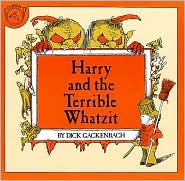 Early Literacy Aside--Explain: Today we are going to focus on vocabulary, one of the early literacy skills. Vocabulary is knowing the meanings of words, of things, concepts, feelings and ideas.Book Introduction: Talk about the word cellar. What is a cellar? Explain the word.
Read the book Harry and the Terrible Whatzit by Dick Gackenbach.
Early Literacy Aside--Example: Go ahead and use words that are unfamiliar to your child. Don't replace words in books that they may not understand, but explain them. This will build their vocabulary.
Early Literacy Aside--Empower: Don't forget when reading to your children at home, don't replace words, but explain them. This helps build their vocabulary and will make it easier for your children to later understand what they read.
Submitted by Janet Boucher, Blue Ridge (VA) Regional Library
Early Literacy Aside--Explain: Today we are going to focus on vocabulary, one of the early literacy skills. Vocabulary is knowing the meanings of words, of things, concepts, feelings and ideas.Book Introduction: Talk about the word cellar. What is a cellar? Explain the word.
Read the book Harry and the Terrible Whatzit by Dick Gackenbach.
Early Literacy Aside--Example: Go ahead and use words that are unfamiliar to your child. Don't replace words in books that they may not understand, but explain them. This will build their vocabulary.
Early Literacy Aside--Empower: Don't forget when reading to your children at home, don't replace words, but explain them. This helps build their vocabulary and will make it easier for your children to later understand what they read.
Submitted by Janet Boucher, Blue Ridge (VA) Regional Library Early Literacy Aside--Example: I am going to read one of my favorite children's books. I love reading this book; it is a lot of fun. When reading with your children, choose books YOU enjoy. Your child picks up on your feelings and understands the enjoyment of books and reading. This supports print motivation, a love of books.Read the book Pete's a Pizza by William Steig putting motions to the words.
Quisque iaculis facilisis lacinia. Mauris euismod pellentesque tellus sit amet mollis.