
 Early Literacy Aside--Explain: Talking with your children while reading, encouraging them to make comments and ask questions is one way to share a book that develops your child's understanding of the book. Make reading with your child a postive experience by allowing your child to make comments and ask questions. Try to focus all your attention on your child for that time.During the storytime, demonstrate these techniques with one or more of your books. Point out what you are doing.
Early Literacy Aside--Empower: Talking with your children and giving them time to respond is supervaluable, even in a conversation consisting entirely of baby babble. This helps your children develop conversation skills. Remember that it can take young children from 5 to 12 seconds to process a question and formulate a response, so it's really important to gie them that extra time to express themselves.
Early Literacy Aside--Explain: Talking with your children while reading, encouraging them to make comments and ask questions is one way to share a book that develops your child's understanding of the book. Make reading with your child a postive experience by allowing your child to make comments and ask questions. Try to focus all your attention on your child for that time.During the storytime, demonstrate these techniques with one or more of your books. Point out what you are doing.
Early Literacy Aside--Empower: Talking with your children and giving them time to respond is supervaluable, even in a conversation consisting entirely of baby babble. This helps your children develop conversation skills. Remember that it can take young children from 5 to 12 seconds to process a question and formulate a response, so it's really important to gie them that extra time to express themselves.
Submitted by Cindy Christin, Bozeman (MT) Public Library and Tracey J., Sacramento (CA) Public Library
 Early Literacy Aside--Empower: Rhymes help teach "phonological awareness," an awareness of the sounds that make up words. You may have noticed that your child enjoys the way a nursery rhyme sounds even if it doesn't make much sense to him. When you introduce a new rhyme or song, repeat it at least twice. Three times is even better. And be sure to keep repeating the old, familiar rhymes too.
Submitted by Cindy Christin, Bozeman (MT) Public Library
Early Literacy Aside--Empower: Rhymes help teach "phonological awareness," an awareness of the sounds that make up words. You may have noticed that your child enjoys the way a nursery rhyme sounds even if it doesn't make much sense to him. When you introduce a new rhyme or song, repeat it at least twice. Three times is even better. And be sure to keep repeating the old, familiar rhymes too.
Submitted by Cindy Christin, Bozeman (MT) Public Library Demonstrate aspects of dialogic reading* by asking open-ended questions during your sharing of a book.Book Introduction: With this next book we are going to focus on what we call "dialogic" or "interactive reading."
Read a book. Come back to a picture and ask a question that cannot be answered with yes or now.
Early Literacy Aside--Example: This technique of sharing a book helps develop their narrative skills, their ability to describe things and experiences.
Early Litearcy Aside--Empower: Try dialogic or interactive reading at home with your child. Simply ask questions about what you've read. You can say, Guess what will happen next or relate the story to your child's real experience. Try to ask questions that cannot be answered with yes or no, or just by pointing to the pictures. Having the children talk about the book helps the develop narrative skills. Also, when the child gives a one-word response, you might expand on what she said, adding description or more information.
Demonstrate aspects of dialogic reading* by asking open-ended questions during your sharing of a book.Book Introduction: With this next book we are going to focus on what we call "dialogic" or "interactive reading."
Read a book. Come back to a picture and ask a question that cannot be answered with yes or now.
Early Literacy Aside--Example: This technique of sharing a book helps develop their narrative skills, their ability to describe things and experiences.
Early Litearcy Aside--Empower: Try dialogic or interactive reading at home with your child. Simply ask questions about what you've read. You can say, Guess what will happen next or relate the story to your child's real experience. Try to ask questions that cannot be answered with yes or no, or just by pointing to the pictures. Having the children talk about the book helps the develop narrative skills. Also, when the child gives a one-word response, you might expand on what she said, adding description or more information.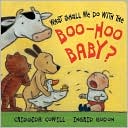 Early Literacy Aside--Explain: I will be having the children hear and make animal sounds. This is one of the ways to develop phonological awareness, hearing the smaller sounds in words. This is the beginning step to later sounding out words when they learn to read.Book Introduction: Our next book is What Shall We Do with teh Boo-Hoo Baby? by Cressida Cowell. All join in together with the animal sounds and the crying baby! [If you want you can practice the animal sounds and the boo-hoo for crying before starting the book.]
Read the book.
Early Literacy Aside--Example: Good job everyone. Parents, letting the children hear and make the sounds helps them later hear the sounds in words.
Early Literacy Aside--Empower: Feel free to check out these books I have displayed which have animal and other sounds, which will help with phonological awareness.
Early Literacy Aside--Explain: I will be having the children hear and make animal sounds. This is one of the ways to develop phonological awareness, hearing the smaller sounds in words. This is the beginning step to later sounding out words when they learn to read.Book Introduction: Our next book is What Shall We Do with teh Boo-Hoo Baby? by Cressida Cowell. All join in together with the animal sounds and the crying baby! [If you want you can practice the animal sounds and the boo-hoo for crying before starting the book.]
Read the book.
Early Literacy Aside--Example: Good job everyone. Parents, letting the children hear and make the sounds helps them later hear the sounds in words.
Early Literacy Aside--Empower: Feel free to check out these books I have displayed which have animal and other sounds, which will help with phonological awareness.
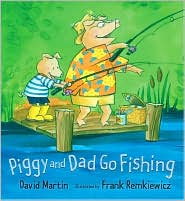 Read the book Piggy and Dad Go Fishing by David Martin. Retell the story using props.Early Literacy Aside--Empower: You encourage dramatic play when you give your children opporutnities to retell stories with your children using things around the house. Having your children retell stories helps them remember the story and also to understand how stories work, with a beginning, a middle and an end. This will help them later in school when they will write their own stories and to understand stories they will read.
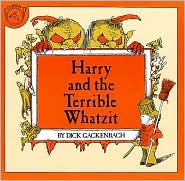 Early Literacy Aside--Explain: Today we are going to focus on vocabulary, one of the early literacy skills. Vocabulary is knowing the meanings of words, of things, concepts, feelings and ideas.Book Introduction: Talk about the word cellar. What is a cellar? Explain the word.
Read the book Harry and the Terrible Whatzit by Dick Gackenbach.
Early Literacy Aside--Example: Go ahead and use words that are unfamiliar to your child. Don't replace words in books that they may not understand, but explain them. This will build their vocabulary.
Early Literacy Aside--Empower: Don't forget when reading to your children at home, don't replace words, but explain them. This helps build their vocabulary and will make it easier for your children to later understand what they read.
Submitted by Janet Boucher, Blue Ridge (VA) Regional Library
Early Literacy Aside--Explain: Today we are going to focus on vocabulary, one of the early literacy skills. Vocabulary is knowing the meanings of words, of things, concepts, feelings and ideas.Book Introduction: Talk about the word cellar. What is a cellar? Explain the word.
Read the book Harry and the Terrible Whatzit by Dick Gackenbach.
Early Literacy Aside--Example: Go ahead and use words that are unfamiliar to your child. Don't replace words in books that they may not understand, but explain them. This will build their vocabulary.
Early Literacy Aside--Empower: Don't forget when reading to your children at home, don't replace words, but explain them. This helps build their vocabulary and will make it easier for your children to later understand what they read.
Submitted by Janet Boucher, Blue Ridge (VA) Regional Library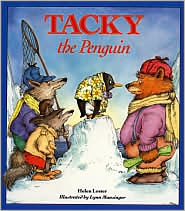 As you read the book, ask the children to identify the animals in the book. Talk about the landscape in the pictures--where in the world might this take place? Use words the children may not know (arctic, icebergs, ice floes, glaciers, etc.). Also, talk about Tacky the Penguin's personality, his uniqueness and originality, explaining words children may not know. For an activity, have children and adults draw and color a penguin however they want.Early Literacy Aside--Empower: We used lots of interesting words today with Tacky the Penquin, some were not even in the book. This helps develop your child's vocabulary. On your way home, talk about being creative and ways your child is unique, using some of the interesting words we used today and adding your own. Through talking and talking about your children's drawings there are many opportunities to expand your child's vocabulary.
 Read the book Snap! by Marcia Vaughan.Early Literacy Aside--Example: This book lends itself to retelling events which helps your child understand the story. Encourage your child with questons that leave room for them to describe what they hear or see. I used questions like, "What did Joey do when his Mom fell asleep?" and "Who did he meet?"
Early Literacy Aside--Empower: The ability to retell a story is an important skill for children to have in order to understand what they are reading. Predicting what happens next and acting it out, or as it's usually called, pretend playing, is a fun way to retell a story and to gain background knowldge along the way.
Read the book Snap! by Marcia Vaughan.Early Literacy Aside--Example: This book lends itself to retelling events which helps your child understand the story. Encourage your child with questons that leave room for them to describe what they hear or see. I used questions like, "What did Joey do when his Mom fell asleep?" and "Who did he meet?"
Early Literacy Aside--Empower: The ability to retell a story is an important skill for children to have in order to understand what they are reading. Predicting what happens next and acting it out, or as it's usually called, pretend playing, is a fun way to retell a story and to gain background knowldge along the way. Early Literacy Aside--Explain: Narrative skills is helping your child tell a story. Researchers say this is an important skill towards your child learning to read, understanding what he will read. In this storytime we will have fun while using narrative skills.During the storytime:
Early Literacy Aside--Example: In this story we will be using narrative skills to tell our story and to talk about the events taking place. Narrative skills is one of the early literacy skills that help your children learn to read. This includes giving your children time to think about and answer questions about the story. Listen as I ask questions that cannot be answered with just yes or no.
Read the book.
Early Literacy Aside--Empower: Ask your child about storytime today when you get home and help them retell one of the stories. You'll be continuing to develop your child's narrative skills!
Early Literacy Aside--Explain: Narrative skills is helping your child tell a story. Researchers say this is an important skill towards your child learning to read, understanding what he will read. In this storytime we will have fun while using narrative skills.During the storytime:
Early Literacy Aside--Example: In this story we will be using narrative skills to tell our story and to talk about the events taking place. Narrative skills is one of the early literacy skills that help your children learn to read. This includes giving your children time to think about and answer questions about the story. Listen as I ask questions that cannot be answered with just yes or no.
Read the book.
Early Literacy Aside--Empower: Ask your child about storytime today when you get home and help them retell one of the stories. You'll be continuing to develop your child's narrative skills! Early Literacy Aside--Explain: Researchers have found that 95% of children's attention goes to the pictures in the book. When you run your fingers under the title as you read it, this helps show them you are reading the text, not the pictures. This is part of print awareness and is one of the skills children need to learn to read.During the storytime--Read the book running your finger under the repeated phrases.
Early Literacy Aside--Example: You can run your finger under the repeated phrases to match the text to the words. Then your action doesn't get in the way of the story. Read the book running your finger under the repeated phrases.
Early Literacy Aside--Empower: When you read withyour children at home, hold the book upside down or backwards and see if your child notices. Be sure to turn the book if a page is in a different direction. Theis helps develop their print awareness.
Submitted by Melissa Davis, Bedford (VA) Public Library
Early Literacy Aside--Explain: Researchers have found that 95% of children's attention goes to the pictures in the book. When you run your fingers under the title as you read it, this helps show them you are reading the text, not the pictures. This is part of print awareness and is one of the skills children need to learn to read.During the storytime--Read the book running your finger under the repeated phrases.
Early Literacy Aside--Example: You can run your finger under the repeated phrases to match the text to the words. Then your action doesn't get in the way of the story. Read the book running your finger under the repeated phrases.
Early Literacy Aside--Empower: When you read withyour children at home, hold the book upside down or backwards and see if your child notices. Be sure to turn the book if a page is in a different direction. Theis helps develop their print awareness.
Submitted by Melissa Davis, Bedford (VA) Public Library
 Early Literacy Aside--Explain: Vocabulary is a very important early literacy skill. By vocabulary, I mean knowing the meanings of words. Today we're focusing on the concept of opposites.
Read the book Maisy Big, Maisy Small by Lucy Cousins with time to allow participants to respond with the opposite word. [Add a synonym for a couple of the words as well. If a participant gives a different word for the opposite word, comment on it. For example if you say big and the book says small, but a child says tiny, you can note that tiny and small have similar meanings and both are the opposite of big.]
Early Literacy Aside--Example: Using this book your children filled in the word meaning the opposite of the one I said from the book. You can always add more interesting words for both the opposite and synonyms for some words. In this way you build your children's vocabulary.
Early Litearcy Aside--Empower: Today in storytime we talked about opposites. As you go about your day, when talking about feelings (hungry, full, tired, wide awake), about what you are doing (relaxing, hurrying, walking slowly, running quickly), or playing, there are many opportunities to think of opposites which builds your children's vocabulary. These little things you do throughout the day will later help them understand what they read.
Early Literacy Aside--Explain: Vocabulary is a very important early literacy skill. By vocabulary, I mean knowing the meanings of words. Today we're focusing on the concept of opposites.
Read the book Maisy Big, Maisy Small by Lucy Cousins with time to allow participants to respond with the opposite word. [Add a synonym for a couple of the words as well. If a participant gives a different word for the opposite word, comment on it. For example if you say big and the book says small, but a child says tiny, you can note that tiny and small have similar meanings and both are the opposite of big.]
Early Literacy Aside--Example: Using this book your children filled in the word meaning the opposite of the one I said from the book. You can always add more interesting words for both the opposite and synonyms for some words. In this way you build your children's vocabulary.
Early Litearcy Aside--Empower: Today in storytime we talked about opposites. As you go about your day, when talking about feelings (hungry, full, tired, wide awake), about what you are doing (relaxing, hurrying, walking slowly, running quickly), or playing, there are many opportunities to think of opposites which builds your children's vocabulary. These little things you do throughout the day will later help them understand what they read.
Quisque iaculis facilisis lacinia. Mauris euismod pellentesque tellus sit amet mollis.