Introduce book: This book about a train uses pictures for for some words. You can help me by filling in the words when you see the picture.Read book: As you read the book, point to the pictures in the text so that the participants (children and adults) will chime in with the appropriate words.
Early Literacy Aside--Example: (Print Awareness) As you point to the pictures and have children say the words, you are helping them see that pictures represent words. This is the beginning to helping them understand that the written word also represents the words we say. Print awareness is one of the skills children need to be able to learn to read and you are helping to develop this skill when you point to pictures and words as you say words.
Early Literacy Aside--Empower: (for Print Awareness) Having words as part of the text of the story is a fun way to write stories with your child. As your child tells you a story, you can write it down and let them draw pictures for some of the repeated words. They see the written words for their spoken words which develops print awareness.
Early Literacy Aside--Example: (for Narrative Skills) Having your young children chime in with a word or phrase, as much as they can remember, is a first step to being able to retell the whole story. Retelling stories helps children develop narrative skills which later helps them understand what they read.
Early Literacy Aside--Empower: (Narrative Skills) This is a cumulative story, where the lines are repeated. Having your child say the repeated phrases helps to develop retelling the story which develops their narrative skills, one of the skills that helps with later reading. Retelling stories helps develop their understanding of the story as well.
Choose only one skill to highlight (to say the aside).
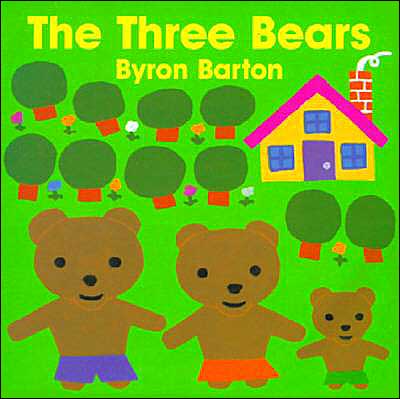 Early Literacy Aside--Explain: Narrative skills is the ability to talk about events and tell stories. Having children tell you what they are thinking, talk about things that happen, or tell you stories is later going to help them understand what they read.Read The Three Bears and have children help you retell the story using props or a flannel board.
Early Literacy Aside--Example: Retelling stories helps children understand what they read. Using props found around home can help children remember and retell stories.
Early Literacy Aside--Empower: When children do what is called dramatic play, when they act out stories, this kind of play helps children understand the structure and story and helps them understand the story itself. Play is a great way to support later reading.
Early Literacy Aside--Explain: Narrative skills is the ability to talk about events and tell stories. Having children tell you what they are thinking, talk about things that happen, or tell you stories is later going to help them understand what they read.Read The Three Bears and have children help you retell the story using props or a flannel board.
Early Literacy Aside--Example: Retelling stories helps children understand what they read. Using props found around home can help children remember and retell stories.
Early Literacy Aside--Empower: When children do what is called dramatic play, when they act out stories, this kind of play helps children understand the structure and story and helps them understand the story itself. Play is a great way to support later reading.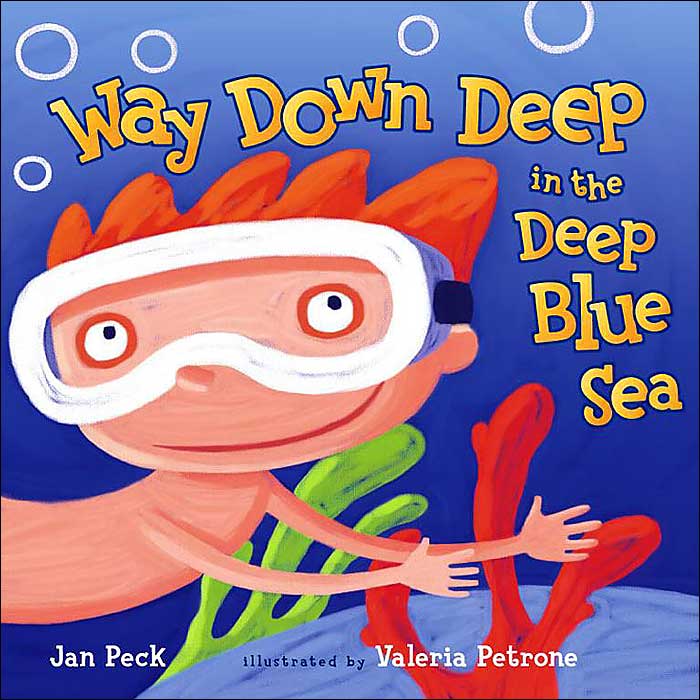 Introduction: I am going to read our next book, Way Down Deep in the Deep Blue Sea by Jan Peck. Then you can tell it with me on the flannel board.Read Way Down Deep in the Deep Blue Sea. Repeat some of the rhymes to help them remember.
Flannel Board: As you put up pieces on the flannel board have the children retell the story.
Early Literacy Aside--Example: Using the flannel board pieces as a clue will help your child remember the story to retell it. Encouraging your children to retell stories helps them to both remember and to understand them. It is a first step in helping them to later understand what they will read.
Introduction: I am going to read our next book, Way Down Deep in the Deep Blue Sea by Jan Peck. Then you can tell it with me on the flannel board.Read Way Down Deep in the Deep Blue Sea. Repeat some of the rhymes to help them remember.
Flannel Board: As you put up pieces on the flannel board have the children retell the story.
Early Literacy Aside--Example: Using the flannel board pieces as a clue will help your child remember the story to retell it. Encouraging your children to retell stories helps them to both remember and to understand them. It is a first step in helping them to later understand what they will read. Early Literacy Aside--Explain: Today we're going to highlight narrative skills. This is the ability to describe things and to talk about events and tell stories. Researchers have noted this skill as one of the early literacy skills that will help your child be ready to read. It helps children
 To look in a birds nest; then there were three.
Three little kittens wondered what to do.
One saw a mouse, and then there were two.
Two little kittens playing near a wall.
One little kitten chased a red ball.
One little kitten with fur soft as silk,
Left all alone to drink a dish of milk.
To look in a birds nest; then there were three.
Three little kittens wondered what to do.
One saw a mouse, and then there were two.
Two little kittens playing near a wall.
One little kitten chased a red ball.
One little kitten with fur soft as silk,
Left all alone to drink a dish of milk.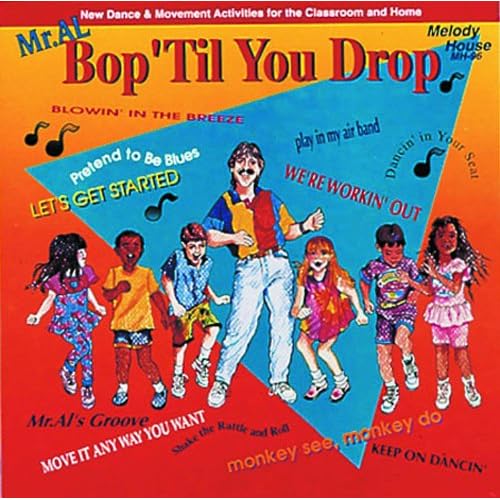 Early Literacy Aside--Explain: Research shows that there are early literacy skills that influence a child's ability to learn to read. Today, you will probably notice several places where I demonstrate examples of narrative skills, which is the ability to describe things and events and to tell stories. When you develop this skill, it will help your children understand what they reads later.Song: Bop 'Til You Drop
Go through the sequence of motions that are in the song, Bop 'Til You Drop
Early Literacy Aside--Example: Singing songs that have a certain order is one great way for children to remember the sequence or order of things. They will use the same skill when they retell a story. They learn how stories work.
Early Literacy Aside--Empower: One thing that you can do at home to develop narrative skills is to describe regular activities such as taking a bath--"first we'll get out the towel, then we'll put the water in the tub and add the bubbles/toys, then we'll take off your clothes, and get in the water. We can scrub our toes, our ears . . . " With older kids, let THEM describe the sequence of events with prompts like, "What do we have to do before we put the bubbles in? or "What do we do next?"
Early Literacy Aside--Explain: Research shows that there are early literacy skills that influence a child's ability to learn to read. Today, you will probably notice several places where I demonstrate examples of narrative skills, which is the ability to describe things and events and to tell stories. When you develop this skill, it will help your children understand what they reads later.Song: Bop 'Til You Drop
Go through the sequence of motions that are in the song, Bop 'Til You Drop
Early Literacy Aside--Example: Singing songs that have a certain order is one great way for children to remember the sequence or order of things. They will use the same skill when they retell a story. They learn how stories work.
Early Literacy Aside--Empower: One thing that you can do at home to develop narrative skills is to describe regular activities such as taking a bath--"first we'll get out the towel, then we'll put the water in the tub and add the bubbles/toys, then we'll take off your clothes, and get in the water. We can scrub our toes, our ears . . . " With older kids, let THEM describe the sequence of events with prompts like, "What do we have to do before we put the bubbles in? or "What do we do next?"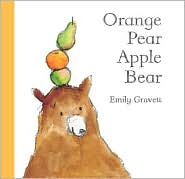 Early Literacy Aside--Example: When you choose books for your children, they like the ones that have pictures of things that are familiar to them. So, here is one with a picture of an apple. You can talk about the apple in the picture, its color, its shape. Then get a real apple and show it to your child. Talk about how it tastes--sweet, how it feels--round and smooth, the sound it makes when you bite it--CRUNCH!By showing your child the real object, you are helping them realize that pictures represent real things. Later they will also understand that printed words represent real things as well. This develops print awareness. I'll read this story to you once, then we'll use the flannel board to tell it again!
Read Orange Pear Apple Bear by Emily Gravett
Early Literacy Aside--Example: When you choose books for your children, they like the ones that have pictures of things that are familiar to them. So, here is one with a picture of an apple. You can talk about the apple in the picture, its color, its shape. Then get a real apple and show it to your child. Talk about how it tastes--sweet, how it feels--round and smooth, the sound it makes when you bite it--CRUNCH!By showing your child the real object, you are helping them realize that pictures represent real things. Later they will also understand that printed words represent real things as well. This develops print awareness. I'll read this story to you once, then we'll use the flannel board to tell it again!
Read Orange Pear Apple Bear by Emily Gravett
 Talk about spiders and how they spin their webs. Each web is different. They use their webs to catch their food.Read the book The Very Busy Spider by Eric Carle.
Put up pieces on a flannel board, having the participants retell the story as you put up the pieces.
Early Literacy Aside--Example: This book has lots of repetition so it is a good one for retelling. I have a handout with the same figures that I used on the flannel board. I will also pass out some yarn to make the web. You can cut out the figures and use the yarn to retell the story. Helping your children to retell stories will help them understand what they read later in school.
Talk about spiders and how they spin their webs. Each web is different. They use their webs to catch their food.Read the book The Very Busy Spider by Eric Carle.
Put up pieces on a flannel board, having the participants retell the story as you put up the pieces.
Early Literacy Aside--Example: This book has lots of repetition so it is a good one for retelling. I have a handout with the same figures that I used on the flannel board. I will also pass out some yarn to make the web. You can cut out the figures and use the yarn to retell the story. Helping your children to retell stories will help them understand what they read later in school.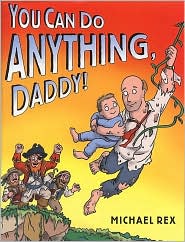 Read the book You Can Do Anything, Daddy by Michael Rex.Craft/Activity: In this book, the boy is thinking of bad things that might happen to him. His father is figuring out how to save his son. I am giving each of you [adults and children] a piece of paper. On one side I want you to draw something you think of that is scary for you. On the other side I want you to think of something your a grownup could do to help you. It is all pretend, make-believe. What can you think of?
Eary Literacy Aside: Having your children draw and then tell you about what they drew develops their narrative skills. It also gives us a window into their thoughts. You can also write down what your children say with the picture so that they make the connection between the written and the spoken word. This helps develop their print awareness, knowing that print has meaning.
Read the book You Can Do Anything, Daddy by Michael Rex.Craft/Activity: In this book, the boy is thinking of bad things that might happen to him. His father is figuring out how to save his son. I am giving each of you [adults and children] a piece of paper. On one side I want you to draw something you think of that is scary for you. On the other side I want you to think of something your a grownup could do to help you. It is all pretend, make-believe. What can you think of?
Eary Literacy Aside: Having your children draw and then tell you about what they drew develops their narrative skills. It also gives us a window into their thoughts. You can also write down what your children say with the picture so that they make the connection between the written and the spoken word. This helps develop their print awareness, knowing that print has meaning. Before reading the book: Ask the children to describe things they would put in a box. And in this box it will contain art supplies. What can you think of? They reply with crayons, paint, etc. This is a great way for children to use the vocabulary that they do know and also good for developing Narrative Skills, which is the ability to describe events and tell stories. Now let's see how a book can help introduce children to new vocabulary.Read the book Art Box by Gail Gibbons.
Have items like compass, protractor, etc. available for the children to see and use. Talk about what they do.
Early Literacy Aside--Empower: Parents, having real objects to help children understand words in the book is one way to help build their vocabulary, to learn the meanings of words. Even when you are not reading books, just talking about objects around the house and what they do is one way to expand children's understanding.
Before reading the book: Ask the children to describe things they would put in a box. And in this box it will contain art supplies. What can you think of? They reply with crayons, paint, etc. This is a great way for children to use the vocabulary that they do know and also good for developing Narrative Skills, which is the ability to describe events and tell stories. Now let's see how a book can help introduce children to new vocabulary.Read the book Art Box by Gail Gibbons.
Have items like compass, protractor, etc. available for the children to see and use. Talk about what they do.
Early Literacy Aside--Empower: Parents, having real objects to help children understand words in the book is one way to help build their vocabulary, to learn the meanings of words. Even when you are not reading books, just talking about objects around the house and what they do is one way to expand children's understanding. Early Literacy Aside--Explain: Narrative skills can be developed by having your children tell stories. This is easier for some children when they recognize patterns so that they can predict what will happen next.Early Literacy Aside--Example: As we read the book we want to encourage our children to recognize the pattern and to repeat "buzz, buzz, buzz" and "buzz off."
Read Buzz, Buzz, Buzz! Went Bumble-bee by Colin West
Fingerplay: Here is the Beehive
Here is the beehive. Where are the bees? (Hold up fist.)
Hidden away where nobody sees. (Move other hand around fist.)
Watch and you see them come out of the hive. (Bend head close to fist.)
One, two, three, four, five. (Hold fingers up one at a time.)
Bzzzzzzzz all fly away! (Wave fingers.)
Early Literacy Aside--Empower: Children enjoy repeating phrases as they did in our book and song. Please help your children look for patterns in the books and songs you do at home. This helps foster your children's narrative skills which will later help them understand how stories work and will help them understand what they read.
Early Literacy Aside--Explain: Narrative skills can be developed by having your children tell stories. This is easier for some children when they recognize patterns so that they can predict what will happen next.Early Literacy Aside--Example: As we read the book we want to encourage our children to recognize the pattern and to repeat "buzz, buzz, buzz" and "buzz off."
Read Buzz, Buzz, Buzz! Went Bumble-bee by Colin West
Fingerplay: Here is the Beehive
Here is the beehive. Where are the bees? (Hold up fist.)
Hidden away where nobody sees. (Move other hand around fist.)
Watch and you see them come out of the hive. (Bend head close to fist.)
One, two, three, four, five. (Hold fingers up one at a time.)
Bzzzzzzzz all fly away! (Wave fingers.)
Early Literacy Aside--Empower: Children enjoy repeating phrases as they did in our book and song. Please help your children look for patterns in the books and songs you do at home. This helps foster your children's narrative skills which will later help them understand how stories work and will help them understand what they read. Early Literacy Aside--Explain: Narrative skills includes the ability to retell stories. This is one of the early literacy skills that researchers have noted are important so that your children will later understand what they read.Read Dog Blue by Polly Dunbar.
Early Literacy Aside--Example: Acting out stories or part so them helps children internalize the story and remember it. It will make it easier for your children to retell the story and understand it. They also learn the structure of story--how stories work with a beginning, a middle, and an end.
Act out the story.
Early Literacy Aside--Empower: Children enjoy talking about books you have read together. It is a good way to engage them in conversation, and also helps them remember the story they have read. The ability to retell a story is an important skill to learn before going to school. It helps them understand how stories work and to understand what they will read.
Early Literacy Aside--Explain: Narrative skills includes the ability to retell stories. This is one of the early literacy skills that researchers have noted are important so that your children will later understand what they read.Read Dog Blue by Polly Dunbar.
Early Literacy Aside--Example: Acting out stories or part so them helps children internalize the story and remember it. It will make it easier for your children to retell the story and understand it. They also learn the structure of story--how stories work with a beginning, a middle, and an end.
Act out the story.
Early Literacy Aside--Empower: Children enjoy talking about books you have read together. It is a good way to engage them in conversation, and also helps them remember the story they have read. The ability to retell a story is an important skill to learn before going to school. It helps them understand how stories work and to understand what they will read. Early Literacy Aside--Explain: Narrative skills is the ability to describe things and to talk about events, and to tell stories. Researchers have noted this skill as one of the early literacy skills that will help your child be ready to read. It helps them understand what they will read.Our next book is How To Be a Good Dog by Gail Page. Let's see what this dog learns.
Read How to Be A Good Dog.
Early Literacy Aside--Example: Acting out stories with your whole body helps our children remember the story to retell it. Let's act out the story together now.
Early Literacy Aside--Empower: Developing narrative skills is as easy as talking with your child about what you've read AND especially having them respond too. You can ask them, "What was the funniest part for you?"
Early Literacy Aside--Explain: Narrative skills is the ability to describe things and to talk about events, and to tell stories. Researchers have noted this skill as one of the early literacy skills that will help your child be ready to read. It helps them understand what they will read.Our next book is How To Be a Good Dog by Gail Page. Let's see what this dog learns.
Read How to Be A Good Dog.
Early Literacy Aside--Example: Acting out stories with your whole body helps our children remember the story to retell it. Let's act out the story together now.
Early Literacy Aside--Empower: Developing narrative skills is as easy as talking with your child about what you've read AND especially having them respond too. You can ask them, "What was the funniest part for you?" Demonstrate aspects of dialogic reading* by asking open-ended questions during your sharing of a book.Book Introduction: With this next book we are going to focus on what we call "dialogic" or "interactive reading."
Read a book. Come back to a picture and ask a question that cannot be answered with yes or now.
Early Literacy Aside--Example: This technique of sharing a book helps develop their narrative skills, their ability to describe things and experiences.
Early Litearcy Aside--Empower: Try dialogic or interactive reading at home with your child. Simply ask questions about what you've read. You can say, Guess what will happen next or relate the story to your child's real experience. Try to ask questions that cannot be answered with yes or no, or just by pointing to the pictures. Having the children talk about the book helps the develop narrative skills. Also, when the child gives a one-word response, you might expand on what she said, adding description or more information.
Demonstrate aspects of dialogic reading* by asking open-ended questions during your sharing of a book.Book Introduction: With this next book we are going to focus on what we call "dialogic" or "interactive reading."
Read a book. Come back to a picture and ask a question that cannot be answered with yes or now.
Early Literacy Aside--Example: This technique of sharing a book helps develop their narrative skills, their ability to describe things and experiences.
Early Litearcy Aside--Empower: Try dialogic or interactive reading at home with your child. Simply ask questions about what you've read. You can say, Guess what will happen next or relate the story to your child's real experience. Try to ask questions that cannot be answered with yes or no, or just by pointing to the pictures. Having the children talk about the book helps the develop narrative skills. Also, when the child gives a one-word response, you might expand on what she said, adding description or more information.